History

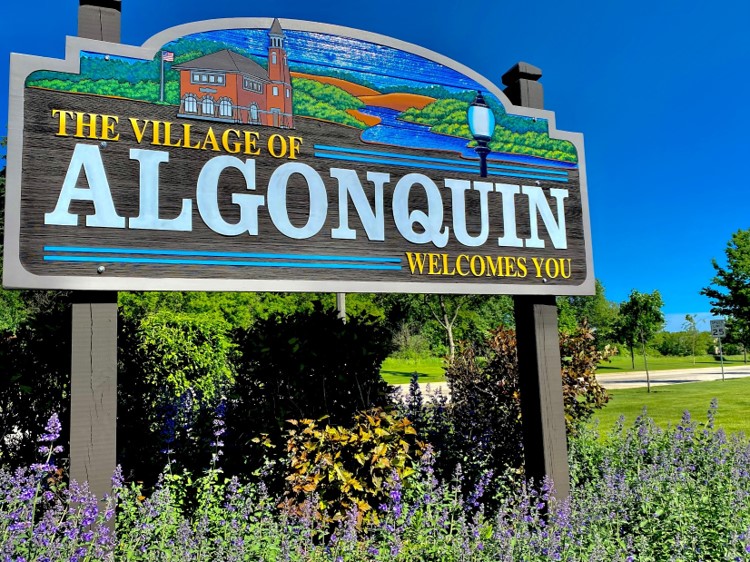
The Village of Algonquin was settled in 1834 and incorporated in 1890. Located in both Kane and McHenry Counties, approximately 47 miles northwest of Chicago, the community has grown considerably while maintaining its connection to the Fox River and its historic roots.
Explore Algonquin's history below, discover the people and places that shaped the community, take a self-guided walking tour through Old Town, and learn more about the work of the Algonquin Historic Commission.

Native Americans belonging to the Potawatomi originally inhabited the Algonquin area. In 1834, the first settler, Samuel Gillilan, arrived from Virginia. Fellow settlers Dr. Cornish, Dr. Plumleigh, Eli Henderson, Alex Dawson, and William Jackson soon followed.
Often referred to as the "Gem of the Fox River Valley," Algonquin is nestled in the foothills of the Fox River Valley. In its early years, residents considered several names for the growing community, including Denny's Ferry, Cornish Ferry, Cornishville, and Osceola. Community leaders eventually selected the name "Algonquin" at the suggestion of Samuel Edwards, who proposed the name of a ship he once owned. The name became official on December 23, 1847.
Organized just a few years after Algonquin received its name, the Congregational Church of Algonquin traces its beginnings to February 9, 1850, when seven men and seven women gathered at the home of Ambrose Dodd to establish the congregation. Early worship services were held in private homes and schools and later in a rented room above a blacksmith shop.
In 1867, under the direction of Reverend J.D. Davis, $2,500 was raised to construct a permanent church. The 32-by-50-foot building, featuring an 80-foot spire and seating for 200 people, was dedicated on January 17, 1868. As the congregation grew, additions and alterations were made while maintaining much of the building's historic character. In 1995, the Congregational Church received historic recognition from the McHenry County Historical Society.
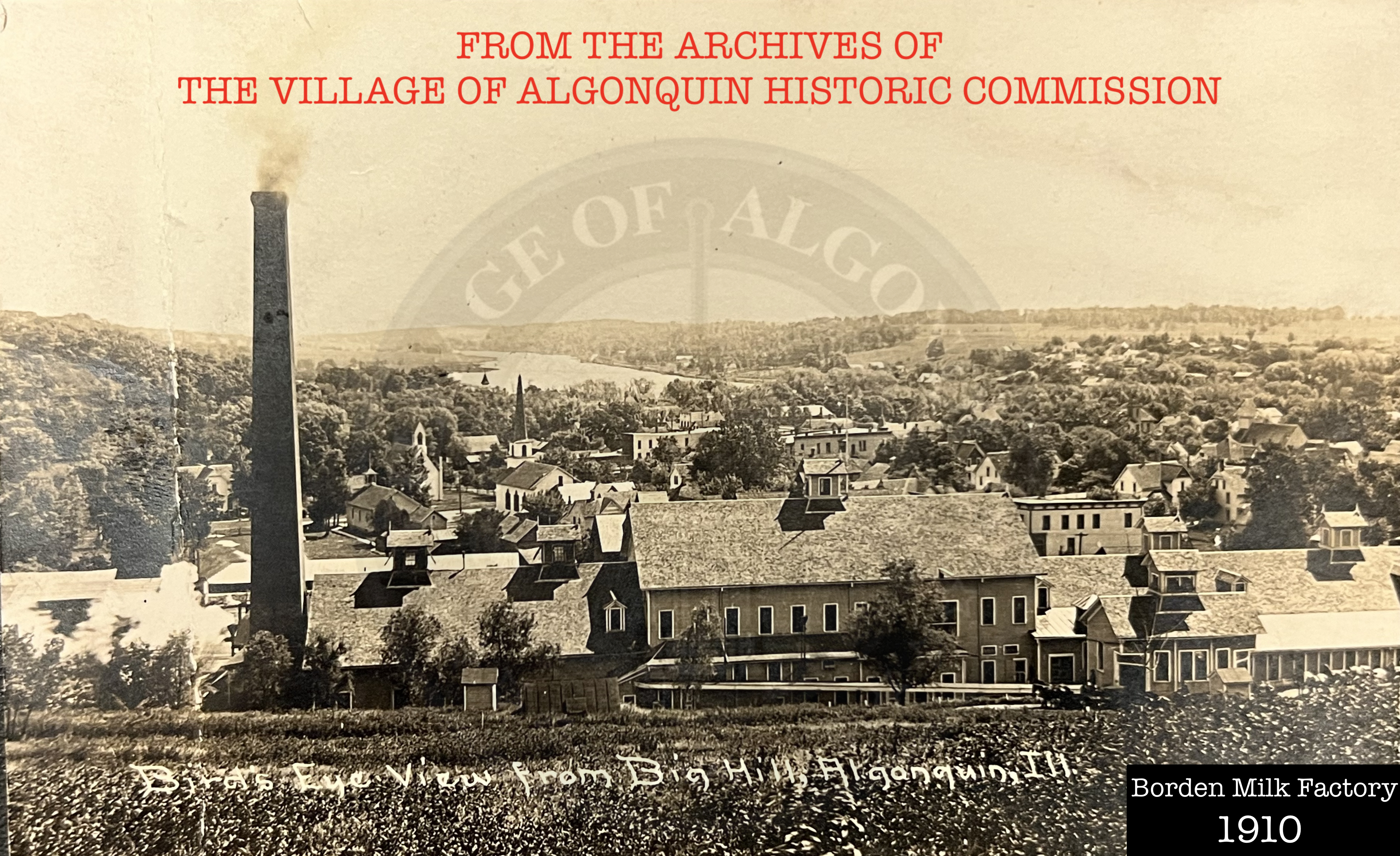
Algonquin experienced new growth with the construction of the railroad in 1855, providing farmers and dairy producers another way to transport goods to Chicago markets. On February 25, 1890, residents voted to incorporate Algonquin as a Village.
Along with its commercial activity, Algonquin became a popular summer destination for Chicago residents drawn to the Fox River and surrounding countryside.
As Algonquin's downtown developed, new businesses established themselves along Main Street. In 1892, Thomas Kabon constructed a large two-story brick building known as Columbia Hall. Its second floor contained a banquet hall, while two retail establishments occupied the first floor. Businessman Dorr Thomas opened a meat market in the storefront on the building's north end.
Although the business changed ownership several times, the location continued operating as a meat market for more than a century as Main Street Market, representing one of Algonquin's longest-running commercial traditions at the same location.
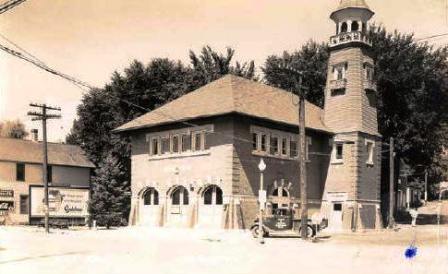
A Village Hall was erected in downtown Algonquin at 2 S. Main Street in 1906. Constructed by Blair and Summer of Janesville, Wisconsin, for $6,848, the building was completed on January 31, 1907.
The building originally housed the sprinkling wagon and fire department, jail, council chambers, clerk's office, and a vault for records. It later served a variety of community uses, including as a library and school, before municipal offices moved to 2200 Harnish Drive in 1996. Historic Village Hall continues to serve as a community facility and meeting center.
One of the most distinctive chapters in Algonquin's history occurred between 1906 and 1913, when the nationally recognized Algonquin Hill Climbs tested early automobiles against the community's steep hills. Successfully completing an Algonquin hill climb was considered an impressive demonstration of an automobile's capabilities, and the "Algonquin Cup" became a prestigious award.
The events were held on Phillips Hill, Perry Hill, and later near what is now Huntington Drive. Hill Climb Park, located at Circle Drive and Huntington Drive, opened in 2004 and includes interpretive features recognizing this unique part of Algonquin's history.
Algonquin's popularity as a summer destination was reflected in the Riverview Hotel, constructed in 1907 near Harrison Street and Algonquin Road. The hotel accommodated visitors escaping Chicago for stays along the Fox River. The building also housed a barber shop and shaving parlor operated by Charles Vanderaue on its first floor.
In 1936, William Markowitz purchased the property, closed the hotel, and reopened the building as a tavern and restaurant while retaining the Riverview name. Through generations of owners and patrons, the Riverview remained a familiar gathering place and part of Algonquin's commercial and social history.
As Algonquin continued to grow, Father Joseph Lonergan was commissioned in 1915 to formally organize a Catholic parish in the community. Land was purchased along the western bank of the Fox River below the dam, and Algonquin summer resident, architect, and engineer Robert Layer, Sr. designed the new church. A cornerstone ceremony for the church, initially known as Corpus Christi Catholic Church, was held on July 11, 1915, drawing parishioners as well as hundreds of summer residents from Chicago.
The church was formally dedicated as the Roman Catholic Church of St. Margaret Mary of the Sacred Heart on Thanksgiving Day 1915. The parish grew alongside the Village during the decades that followed. Its first Catholic school opened in 1955, and continued growth eventually led to construction of a new church, which was dedicated in 1983.
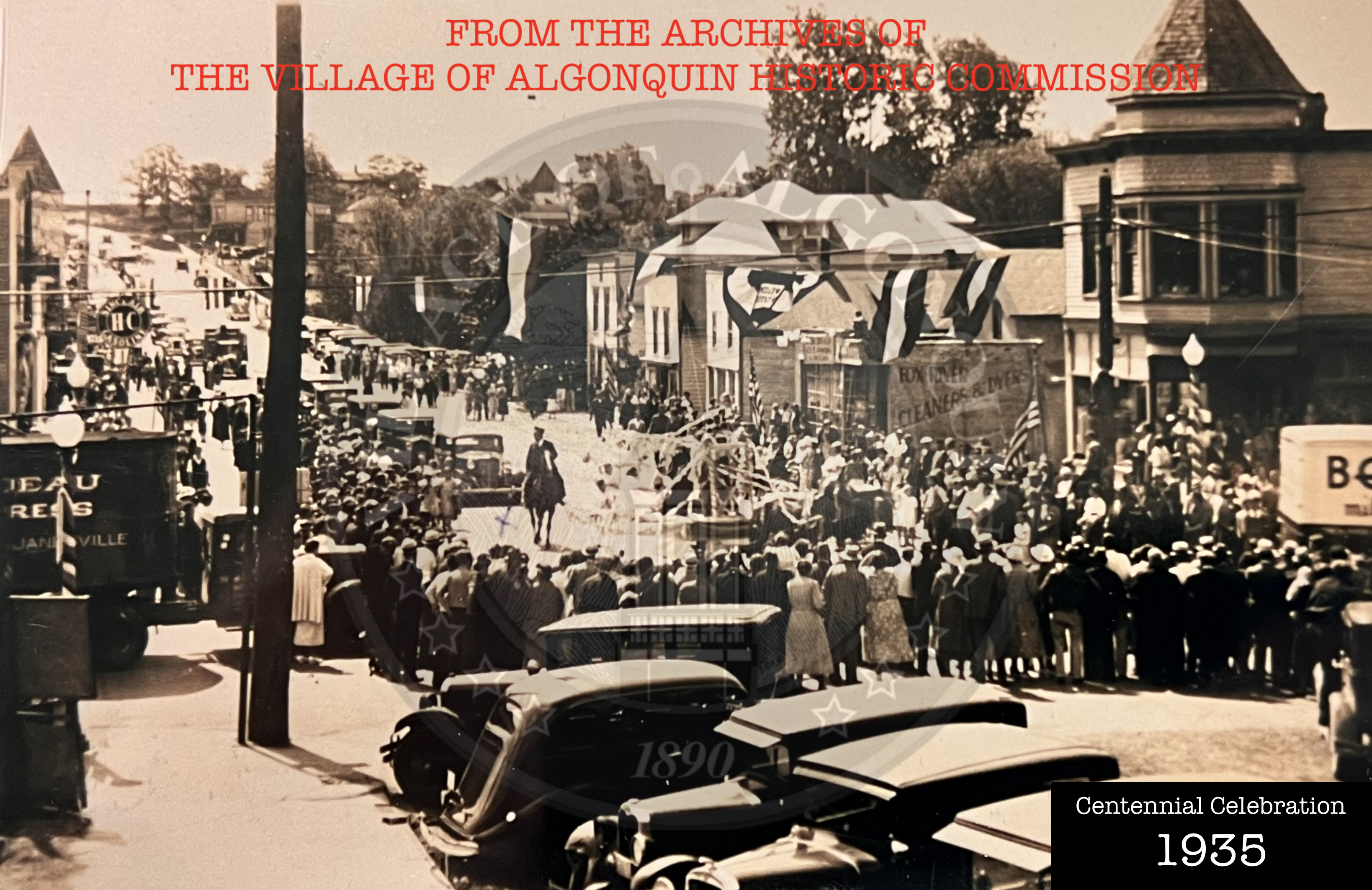
On June 8, 1935, Algonquin held a large celebration honoring the community's 100th birthday. The event carried the theme "Algonquin the Beautiful" and included a song written by school teacher Anne Eldredge, a large parade featuring authentic wagons and vehicles, and a dance in the park accompanied by a full orchestra.
Experience Algonquin's history where it happened. The Old Town Algonquin Walking Tour provides a self-guided look at historic buildings, landmarks, and places that helped shape the community.
Explore the interactive tour before your visit or use it while walking through Old Town to learn more about the people, architecture, businesses, and events connected to each location.
The Algonquin Historic Commission works to research, preserve, and share the Village's history for current and future generations. The Commission helps preserve Algonquin's historic, cultural, and community heritage; promotes awareness and appreciation of local history; maintains historical resources, artifacts, and memorabilia; and provides recommendations to the Village Board regarding preservation efforts within the Old Town District.
The Historic Commission hosts public workshops on the third and fourth Saturdays of each month from 8:30 a.m. to noon on the second floor of Historic Village Hall, 2 S. Main Street.
Workshops provide an opportunity to learn more about the Commission's work, explore historical reference materials, and assist with exhibits, events, and other preservation activities. The Commission also welcomes inquiries from anyone interested in learning more about Algonquin's history, including local families, buildings, organizations, and events.
Community members interested in helping preserve and share Algonquin's history are encouraged to get involved and volunteer with the Commission.
A portion of the historical information provided on this website was excerpted from History of Algonquin (1834–1994), prepared by the Algonquin Historic Commission as an addendum to the Village of Algonquin Comprehensive Plan.
For more information about Algonquin's history, contact the Historic Commission at historiccommission@algonquin.org or attend one of its public workshops.

Site Design and Content Management by
CORE Business Technologies